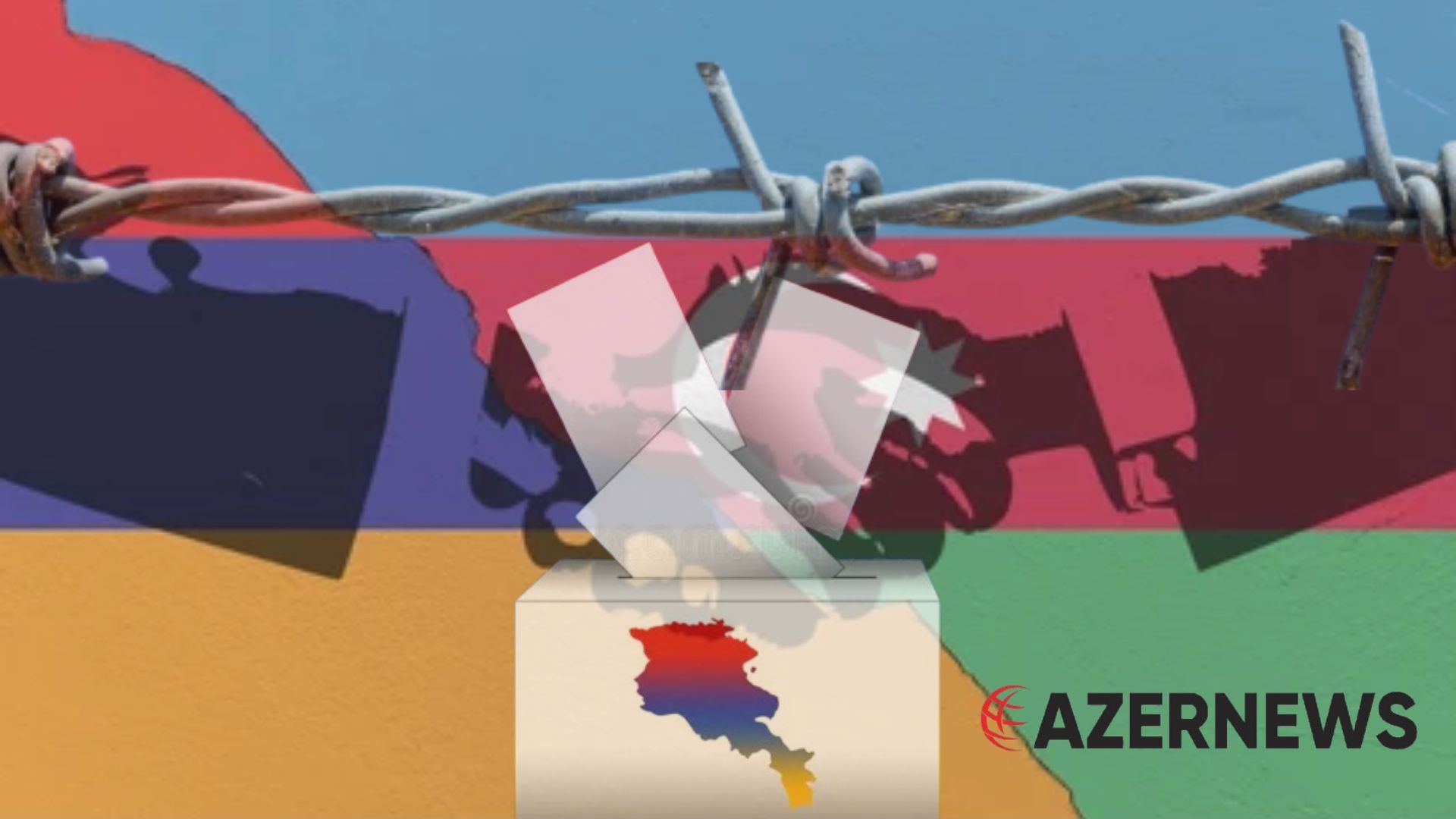
For more than thirty years, Armenia–Azerbaijan relations, which have become a source of conflict in the South Caucasus region, or more precisely, Armenia’s territorial claims, have once again resurfaced like a chronic illness just months before elections in Armenia. For several days now, both during pre-election campaign meetings with the public and in parliamentary speeches, the country’s Prime Minister Nikol Pashinyan has been studying new ideas emerging from the domestic audience and attempting to gauge the public’s attitude towards the concept of peace.
However, the latest outcomes clearly show that preparations for peace in Armenia are still not at the desired level. For example, during a recent public outreach campaign conducted by Pashinyan in the tube station last week, the reaction of an Armenian woman to a map of Armenia presented by the Prime Minister to her young child was notably harsh and rhetorical. The Armenian resident accused Nikol Pashinyan of “handing over Karabakh to Azerbaijan” and stated that the model presented did not reflect her country’s map. Another elderly Armenian citizen voiced similar claims, accusing Pashinyan and alleging that his country had supposedly lost its "sovereign territories". This is a clear manifestation that a segment of society in Armenia still does not wish to distance itself from separatist tendencies.

Yes, in recent years both Azerbaijan and Armenia have taken serious steps towards promoting and encouraging peace. Following a number of initiatives at the diplomatic level, there were also contact meetings between representatives of civil society from both sides. This was not only about leaving behind a conflict that lasted for more than thirty years, but also about taking necessary steps for the two peoples to coexist in one region and to continue their existence as sovereign and developed states. Both Armenia and Azerbaijan witnessed the pain of the war that began in the late 1980s and early 1990s, and how damaging it was to economic development. The prolonged closure of communication lines and the paralysis of diplomatic relations over many years hindered the rapid development of both countries. Armenia, remaining under blockade, was deprived of major economic opportunities due to the closure of its borders with both Azerbaijan and Turkiye. The occupied territories of Karabakh, having remained under the control of a separatist regime for many years, turned into a highly dangerous area. More than 80% of these lands were contaminated with military ammunition and mines, effectively becoming zones of death. Yet during the 30 years of occupation, not a single stone was laid upon another in Jabrayil, Fuzuli, or Aghdam. On the contrary, these territories were reduced to ruins and hidden from the international community for years. No one could have imagined that Aghdam would become the greatest ruin of the 21st century. So where were those who now claim Karabakh as their territory at that time? Why were some Armenians who now call themselves “refugees” not moved when they saw the devastated lands of Karabakh back then?
After the 2020 war, many Armenians who loudly proclaimed “homeland” voluntarily left Karabakh. In 2023, when the last separatist group in Karabakh was eliminated, several ethnic Armenian civilians living there were offered citizenship. This offer was unilateral; it was not conditional upon the return of Azerbaijanis who had been expelled from Armenia in the late 1980s. Azerbaijan took humanitarian steps to ensure the peaceful and secure life of Armenians who had lived in Karabakh. However, those Armenians said, “we do not need Azerbaijan’s water or bread,” and left the country of their own accord. Today, Nikol Pashinyan addresses those same individuals with the following question: “Why do you accuse me? Why did you not remain in Karabakh at that time, and now call yourselves refugees and blame me?”
Last day, the Prime Minister of Armenia once again drew attention with his address to the public that accuses him. He noted that in the upcoming parliamentary elections, the people of Armenia must decide whether the Karabakh movement will continue or not.
Armenian Prime Minister Nikol Pashinyan said this during government hour in response to concerns that some circles perceive his statement—that war would break out if the Civil Contract party does not win the elections—as a threat.
Pashinyan also presented the public with two crucial choices: either to completely end the Karabakh movement, or to return to the past and go to war.
Pashinyan even indirectly touched upon the Declaration of Independence, which for many years included territorial claims against Azerbaijan in Armenia’s constitution. Referring to the Declaration of Independence, the Prime Minister said that it was not a declaration of independence, but rather a declaration of conflict and dependence.
Addressing his people once again, Pashinyan stated that he now links the Karabakh movement, which he currently considers mistaken and once supported himself, to Armenia’s destiny. According to him, the Armenian people must struggle to distance themselves from these claims; otherwise, “this could determine our fate.”

