The recent escalation around the Strait of Hormuz has evolved beyond a mere military-political confrontation between the United States and Iran, turning into a complex process that is reshaping the security architecture of the Gulf, global energy flows, sanction mechanisms, and the strategic behavior of regional states.
What is happening shows that the Strait of Hormuz is not only a maritime route for transporting oil and gas, but also a tool of political pressure, economic deterrence, and diplomatic bargaining.
At the current stage, the main problem is that the actions taken by the parties are determined more by the balance of power than by a legal framework. The United States presents the blockade as a security measure, while Iran considers it an act of war and seeks to redefine the rules of conduct in the strait.
According to the approach of American political scientist Paolo von Schirach, there is serious uncertainty in Washington’s strategy.
 American political scientist Paolo von Schirach
“In the complex situation that has emerged in the Persian Gulf, it is difficult to clearly understand the position of the United States, and the specific objectives and policy tools guiding Washington’s actions are not clearly visible. The current situation shows that a large portion of decisions is based on operational reactions, which reveals that long-term strategic planning has not been sufficiently formed. The fact that the United States is simultaneously exerting military pressure and delivering diplomatic messages indicates that the policy carries internal contradictions,” he said in a statement to APA.
The expert explains the blockade imposed by the United States on Iranian ports as a response to Tehran’s threat to halt maritime transport: “After Iran announced that no ships would be allowed to pass, the United States imposed a blockade on Iranian ports, thereby preventing vessels from entering Iranian waters and accessing the open sea. This effectively means the selective restriction of international trade routes and is an extremely controversial step from the perspective of maritime law. Such a blockade obstructs normal economic activity and turns it into a sphere regulated by military means.”
Iranian political scientist Peiman Salehi, however, assesses the issue from a different perspective.
 Iranian political scientist Peiman Salehi
He told APA that Tehran no longer intends to accept the previous status quo: “Under no circumstances will Iran return to the pre-war status quo in the Strait of Hormuz. Because recent events have shown that the previous model is insufficient to protect the country’s security, economic, and political interests. In the new reality, Tehran is seeking to have greater control and influence, and is hardening its policy in this direction.”
According to Salehi, the issue of the strait is no longer just a subject of diplomatic discussion, but a matter of strategic consensus within Iran: “The issue of the strait has moved beyond the control of diplomats and politicians and has risen to the level of public consensus, becoming a strategic issue similar to approximately 400 kilograms of enriched uranium. This means that any step back would face not only political consequences but also internal public resistance, limiting the room for maneuver of decision-makers.”
Qatari political commentator Karim Ali Mejri, on the other hand, believes that the situation will remain in a format of long-term instability without turning into a full-scale war:

Qatari political commentator Karim Ali Mejri:
“In the short term, the Strait of Hormuz will remain a zone of managed instability, and tensions in the region will not be fully eliminated. This is a model in which the parties will continue to exert pressure on each other but avoid open war, and such a situation may persist for a long time,” he noted.
According to the expert, this phase may be accompanied by incidents and limited military pressure tools: “The current situation may be accompanied by periodic tracking of ships, incidents, and limited military strikes. Although such events are local in nature, they further aggravate the overall security environment and maintain the risk of escalation at any moment.”
Economic war and energy markets
The most serious aspect of the Hormuz crisis is its economic consequences. The energy flows passing through this strait are of vital importance for the industrial economies of Asia and Europe. Therefore, any security risk arising here immediately affects prices, logistics costs, and supply chains.
Paolo von Schirach states that the crisis poses a major risk to the global economy: “The Strait of Hormuz is one of the world’s main energy transportation routes, and any disruption here has a direct impact on global markets. Such disruptions lead to sharp increases in energy prices, rising transportation costs, and the expansion of insurance risks, which undermines global economic stability.”
He particularly emphasizes the dependence of countries such as China, South Korea, France, and Germany on this route: “Countries such as China, South Korea, France, and Germany have a high level of dependence on this route for energy and raw material imports, and this dependence plays a critical role in the continuity of their industrial production. Any tension in Hormuz directly affects the economic planning of these countries.”
Peiman Salehi, on the other hand, believes that Iran now prefers a strategy of economic pressure rather than classical military confrontation: “The current confrontation has already moved beyond the framework of a classical military conflict and entered the stage of economic warfare, where the parties try to influence each other through economic tools instead of delivering direct military strikes. This makes the conflict more long-term and complex in nature.”
In his view, Tehran is targeting not the military but the economic vulnerability of the United States: “Although the US territory does not face a direct military threat, its economic system becomes more vulnerable, and Iran is trying to exploit precisely this weakness. Prolonged tensions create an additional financial burden for the United States, which may lead to changes in strategic decisions.”
Karim Ali Mejri, on the other hand, states that uncertainty in energy markets will persist for a long time: “The current situation increases uncertainty in energy markets, which leads to price volatility. Forecasting becomes more difficult for market participants, and risks rise to a higher level.”
According to him, the Strait of Hormuz remains an irreplaceable route, particularly for LNG trade: “It is not possible to create alternative routes of the same scale for liquefied natural gas. For this reason, the Strait of Hormuz will continue to remain a long-term strategic chokepoint in global energy trade, and its importance will not decrease in the near future.”
Iran’s new strategy and the status quo problem

The main change in Iran’s position is that Tehran no longer views the Strait of Hormuz solely as a defensive line, but as a tool of institutional control and economic influence. This approach makes it difficult for the conflict to return to its previous state in the near future.
Paolo von Schirach says that Iran expected a reciprocal step from the United States after opening the strait: “When Iran announced at one stage that it would allow free passage through the Strait of Hormuz, it expected a reciprocal move from Washington toward lifting the blockade. This was intended as an initial step to restore mutual trust and aimed at creating a diplomatic balance.”
He believes that the US decision to maintain the blockade was not accepted in Tehran: “Although the US administration accepted the opening of the strait, it kept in force the restrictions imposed on Iranian ports, and this position was considered unacceptable in Tehran. This step was assessed by Iran as unilateral pressure and reduced the possibilities for mutual understanding.”
According to Peiman Salehi, even if the United States lifts the blockade, Iran will not return to the previous model of open passage: “Even if the US lifts the naval blockade, it is not realistic for Iran to return to the previous model of a fully open and free passage through the strait. This is because Tehran now views this route as a strategic tool and is trying to apply stricter control mechanisms over it.”
He notes that the new rules will apply only to selected countries: “At best, only vessels from countries not considered hostile may be allowed to pass, and this would be carried out under new rules. This could lead to a strengthening of a selective approach in the international transit system.”
Karim Ali Mejri, on the other hand, states that the main line in the behavior of regional countries is adaptation: “The strategy of regional countries is focused more on risk management than on fundamentally diversifying routes. This approach aims to adapt to current realities and minimize losses.”
This approach shows that Gulf states are beginning to avoid a large-scale war while accepting security risks as a constant reality.
Qatar, LNG, and the limitations of alternative routes
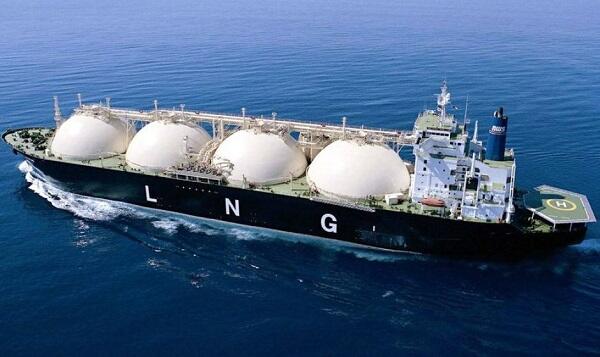
The importance of the Strait of Hormuz is not limited to oil alone. For LNG exporters such as Qatar, this strait is a strategic lifeline. While some alternative pipelines exist for oil, creating alternatives of the same scale for LNG transportation does not appear realistic.
As Paolo von Schirach notes, disruptions in energy routes have an immediate impact on global markets: “Any disruption here directly affects global markets, and this impact may manifest itself in both short-term price shocks and long-term structural changes.”
Peiman Salehi, on the other hand, states that Iran seeks to turn this sensitivity into a strategic advantage: “The main issue is not the revenue generated from tariffs, but the strategic influence they create. Through this means, Iran is trying to gain greater leverage within the international economic system.”
According to him, strengthening control over Hormuz could also complicate the West’s ability to impose sanctions: “If Iran consolidates its control over the strait at an institutional level, the Strait of Hormuz will turn into a tool of mutual economic pressure, and in that case, the implementation of sanctions will become more costly and difficult.”
Karim Ali Mejri, on the other hand, emphasizes that Qatar prioritizes a resilience strategy rather than alternative routes: “Qatar’s approach is not focused on changing liquefied natural gas export routes. Such a step is not realistic from both technical and economic perspectives and would require major infrastructure changes.”
He notes that Doha’s main focus is on risk management: “Within this strategy, increasing production capacity, more flexible management of the LNG tanker fleet, and making operational decisions in line with changing security conditions are among the key priorities. This serves to ensure the continuity of supply.”
Future scenarios
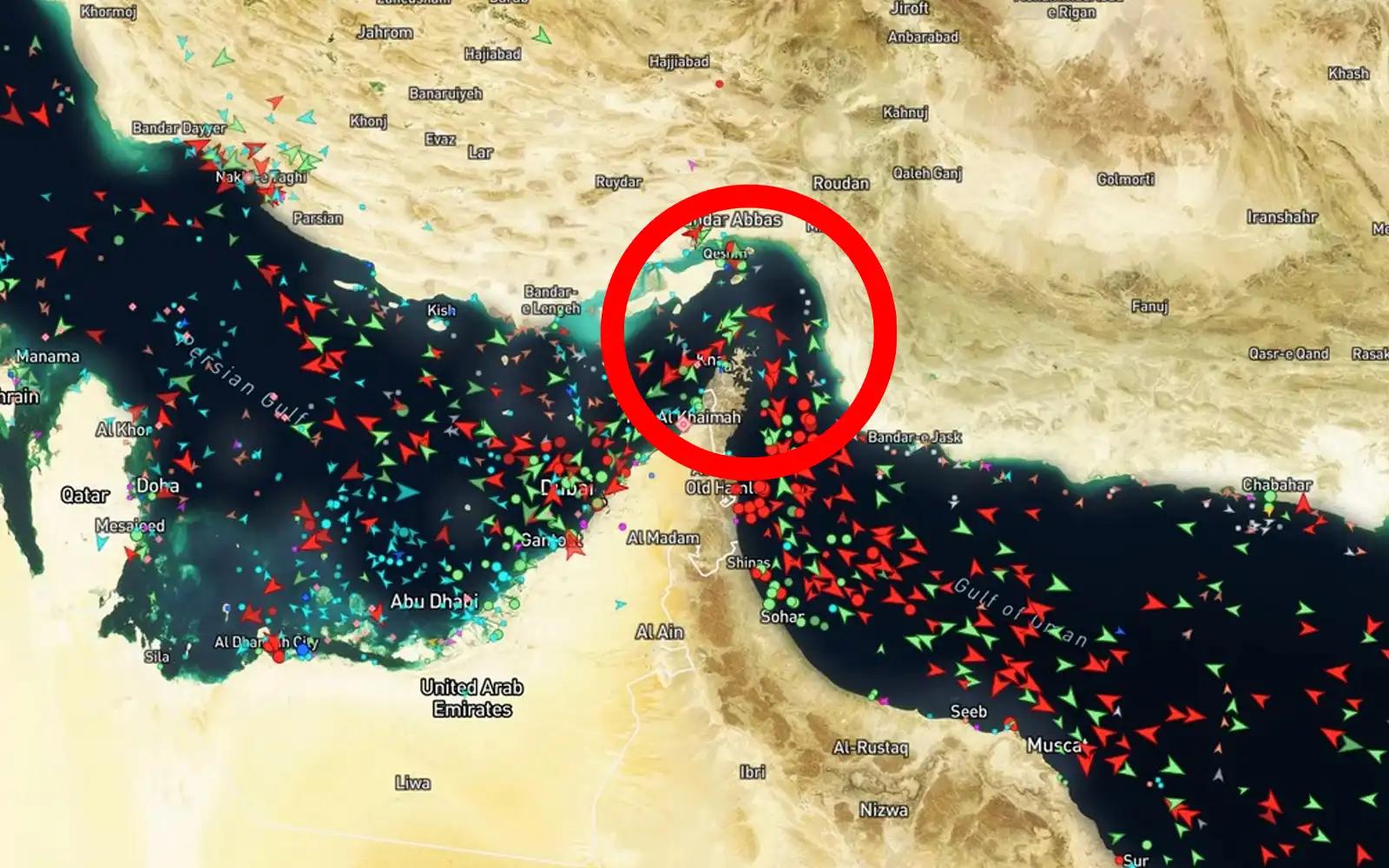
The future of the crisis will depend more on the extent of the economic costs than on the military strength of the parties. Due to the weak functioning of diplomatic channels, it is highly likely that events will continue in the form of managed instability, limited clashes, and economic pressure.
Paolo von Schirach states that diplomatic efforts have not yet yielded results: “Diplomatic efforts have so far failed to produce results, the planned talks in Islamabad did not take place, and the situation continues to evolve dynamically. This indicates that the level of trust between the parties remains low and makes negotiations more difficult.”
In his view, the Hormuz crisis cannot be resolved separately: “A standalone resolution of the Hormuz crisis does not appear realistic, and a sustainable outcome is only possible within the framework of a broader strategic agreement between the parties. Otherwise, local agreements will not bring lasting stability.”
Peiman Salehi, on the other hand, links the duration of the conflict to the economic costs incurred by the United States: “When the conflict or blockade will end largely depends on the level of costs incurred by the United States. As these costs increase, the likelihood of changes in political decisions also rises, creating grounds for compromise.”
He emphasizes that Iran’s main objective is not only transit revenue: “Iran’s primary goal is not merely to collect transit fees, but, in a broader sense, to reshape the balance of global economic pressure, and this strategy serves long-term geopolitical objectives.”
Karim Ali Mejri believes that the parties will try to avoid a large-scale war: “Considering the potentially severe consequences for the global economy, the parties will seek to avoid a full-scale conflict and will keep tensions within certain limits. This indicates that a model of controlled escalation will continue.”
This indicates that the most realistic scenario for the coming period is neither full-scale war nor complete stability. The more likely picture is controlled tension, selective maritime restrictions, high insurance and logistics costs, volatility in energy prices, and the continuation of diplomatic bargaining.
What is happening around the Strait of Hormuz is creating a new security reality in the region. The United States’ blockade policy, Iran’s rejection of the status quo, and the risk-management-oriented behavior of Gulf countries show that the crisis is not a short-term incident. This process will continue to affect price stability in energy markets, international maritime law, sanction mechanisms, and the regional balance of power for a long time.
If the parties fail to reach a broader strategic agreement, the Strait of Hormuz will remain one of the most sensitive geopolitical points of the global economy in the coming period.

