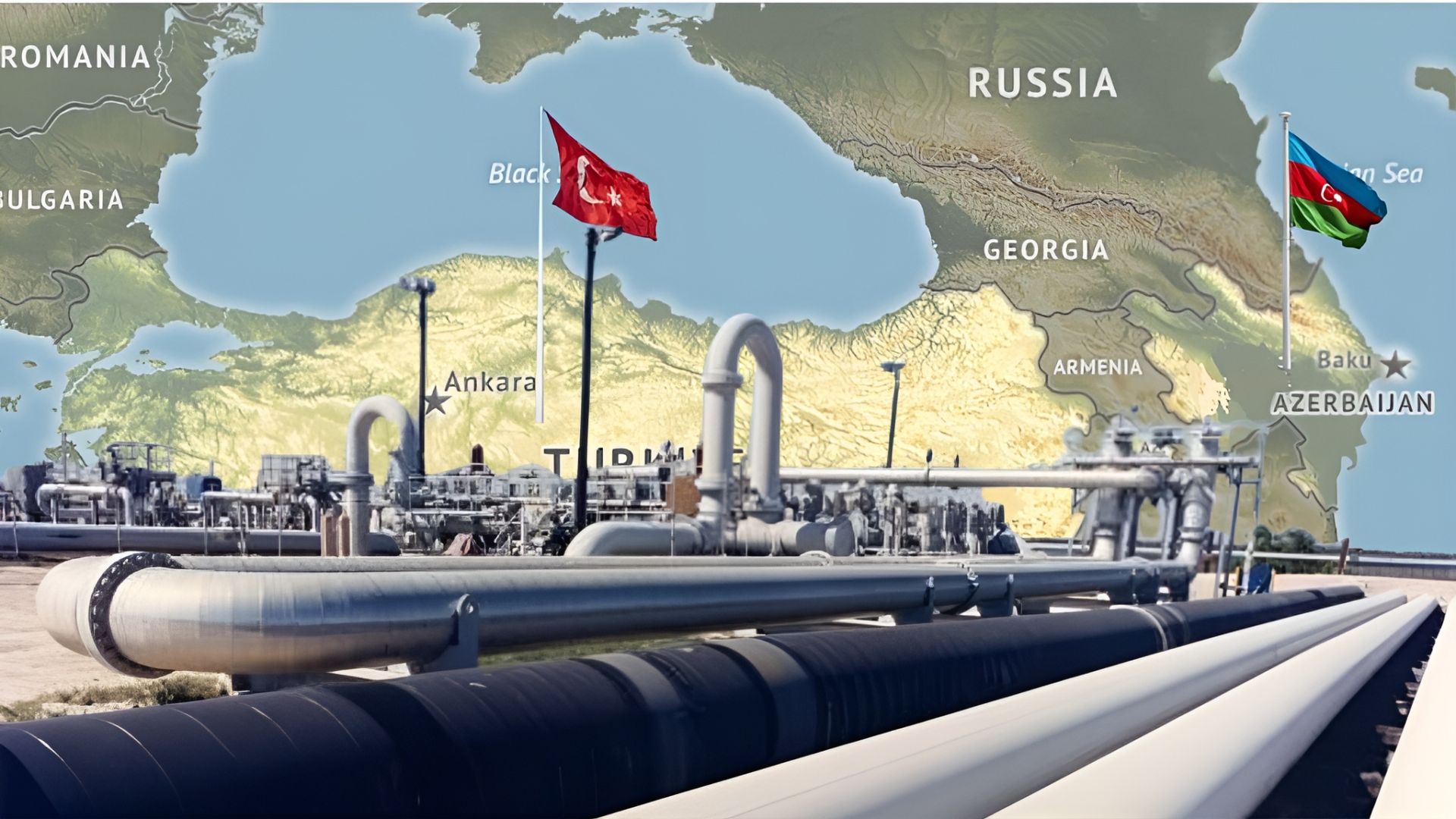
Economic relations between Azerbaijan and Turkiye have been steadily evolving since the early years of Azerbaijan’s independence. A turning point came after 1994, when both countries intensified efforts to strengthen their economic partnership and laid the foundations of a robust legal framework. These steps marked the beginning of a comprehensive stage in bilateral cooperation, paving the way for deeper integration across multiple sectors.
One of the key institutional pillars underpinning this partnership is the Azerbaijan–Turkiye Joint Economic Commission, established in 1996 to coordinate and advance bilateral economic cooperation. The Commission, currently co-chaired by Ali Asadov and Fuat Oktay, has played a central role in shaping the strategic economic agenda between the two countries. At its 9th meeting held in Ankara on February 19, 2021, the Commission adopted a comprehensive Action Plan covering key areas of cooperation. The ongoing implementation of this roadmap reflects both sides’ commitment to translating strategic priorities into concrete outcomes and deepening economic integration.
Turkiye has consistently ranked among the largest foreign investors in Azerbaijan’s economy. Between 1995 and 2021, Turkish direct investments totaled $13.3 billion, including $10.4 billion in the oil sector and $2.9 billion in non-oil industries. Turkish companies maintain a strong presence across a wide range of sectors, including energy, industry, telecommunications, banking and insurance, construction, transportation, food production, textiles, and healthcare underscoring the depth and diversification of their economic engagement.
At the same time, Azerbaijan has emerged as a major investor in Turkiye. Recent years have witnessed a sharp rise in Azerbaijani capital flowing into the Turkish economy, with nearly 2,000 Azerbaijani-owned companies currently operating there. Between 1995 and 2021, Azerbaijan’s direct investments in Turkiye totaled 20.3 billion USD, including 17.1 billion USD in oil and gas and 3.2 billion USD in other sectors. The most notable example is the STAR refinery in İzmir’s Aliağa district, launched in September 2018 by SOCAR with a capital investment of 6.3 billion USD. This project stands as the largest single foreign investment in Turkiye and symbolizes the scale of Azerbaijan’s economic footprint. Azerbaijani investors now rank among the leading foreign business communities in Turkiye, not only in terms of capital but also in the number of enterprises established.
Trade between the two countries continues to expand, with Turkiye consistently ranking as Azerbaijan’s second-largest trading partner in imports, exports, and overall turnover. In recent years, both governments have taken concrete steps to simplify trade procedures and boost volumes. A landmark development was the signing of the Preferential Trade Agreement in Baku on February 25, 2020. The agreement introduced annual tariff quotas for 15 products, reducing customs duties to zero within those quotas. Entering into force on March 1, 2021, this agreement has already begun to facilitate smoother trade flows and create new opportunities for businesses on both sides.
Taken together, these developments highlight the strategic depth of Azerbaijan– Turkiye economic relations. The partnership is not limited to energy, though hydrocarbons remain a cornerstone; it increasingly encompasses non-oil sectors, trade liberalization, and large-scale investments. This diversification strengthens economic resilience and ensures that cooperation between the two countries is not only enduring but also adaptive to global economic shifts. In essence, Azerbaijan and Turkiye have built an economic alliance that complements their political and cultural ties, positioning both nations to benefit from sustained growth and regional leadership in the years ahead.
In January–February of this year, trade turnover between Azerbaijan and Turkiye amounted to 877.1 million USD, which represents a decline of 127.5 million USD or 12.7% compared to the same period in 2025. Turkiye accounted for 14% of Azerbaijan’s overall foreign trade, maintaining its position as the country’s second-largest trading partner after Italy. Exports to Turkiye totaled 532.9 million USD, down by about 7% year-on-year. Despite this decrease, non-oil exports showed slight growth: Azerbaijan exported 83.4 million USD worth of non-oil products to Turkiye, making up 14.37% of total non-oil exports. This modest increase highlights Turkiye’s role as a key market for Azerbaijan’s diversification efforts, even though the overall export structure remains heavily dependent on hydrocarbons.
In contrast, energy exports surged. Azerbaijan exported 47.1 thousand tons of crude oil and petroleum products worth 22.1 million USD to Turkiye, marking a threefold increase in value and nearly double in volume compared to last year. This underscores the continued dominance of the energy sector in bilateral trade relations. Imports from Turkiye, however, fell sharply to 344.2 million USD, a decline of 20.2%, which may reflect reduced demand or a shift toward domestic production.
On a broader scale, Azerbaijan’s total foreign trade turnover reached 6.264 billion USD, down 29.6% compared to the same period in 2025. Exports stood at 3.665 billion USD, while imports amounted to 2.599 billion USD. Both exports and imports declined, yet the trade balance improved significantly, with a surplus of 1.066 billion USD, 1.7 times higher than last year. This improvement, however, was largely driven by reduced imports rather than export expansion.
The current state of Azerbaijan– Turkiye economic relations reveals several important trends. First, while overall trade turnover has contracted, the sharp rise in energy exports confirms the resilience of strategic cooperation in the energy sector. Second, the slight increase in non-oil exports indicates progress in diversification, though the pace remains limited. Third, the decline in imports from Turkiye could signal either growing domestic production capacity or weakening consumption, both of which warrant close monitoring for their implications on economic stability.
In conclusion, Azerbaijan– Turkiye economic ties remain strategically significant. The energy sector continues to anchor bilateral trade, but the gradual rise in non-oil exports suggests potential for a more balanced and sustainable partnership in the future. This trajectory points toward deeper and more diversified economic cooperation between the two countries in the long term.

