The global energy crisis has once again underscored the strategic importance of energy security, particularly for countries heavily reliant on hydrocarbons. The volatility observed in global markets reflects not only dependence on oil and gas, but also the broader challenge of insufficient diversification into alternative energy sources. As a result, the urgency of transitioning to a more balanced and resilient energy mix has become increasingly evident.
However, such a transition is inherently complex, especially for economies historically built on fossil fuels. The development of renewable energy infrastructure requires significant financial investment, favorable natural conditions such as wind and solar resources, and advanced technological capabilities. Among the most critical challenges in this transition is energy storage. Unlike oil, renewable energy cannot be stored in conventional ways, making storage systems an essential component of a sustainable energy model.
In this context, Azerbaijan is actively advancing its energy transition strategy. The country aims to develop up to 6 gigawatts of renewable energy capacity by 2030, increasing this to 8 gigawatts by 2033. This expansion is designed not only to meet growing domestic demand, but also to support electricity exports and power emerging sectors such as data centers. Achieving these targets, however, requires robust energy storage infrastructure to ensure stability and efficiency within the grid.
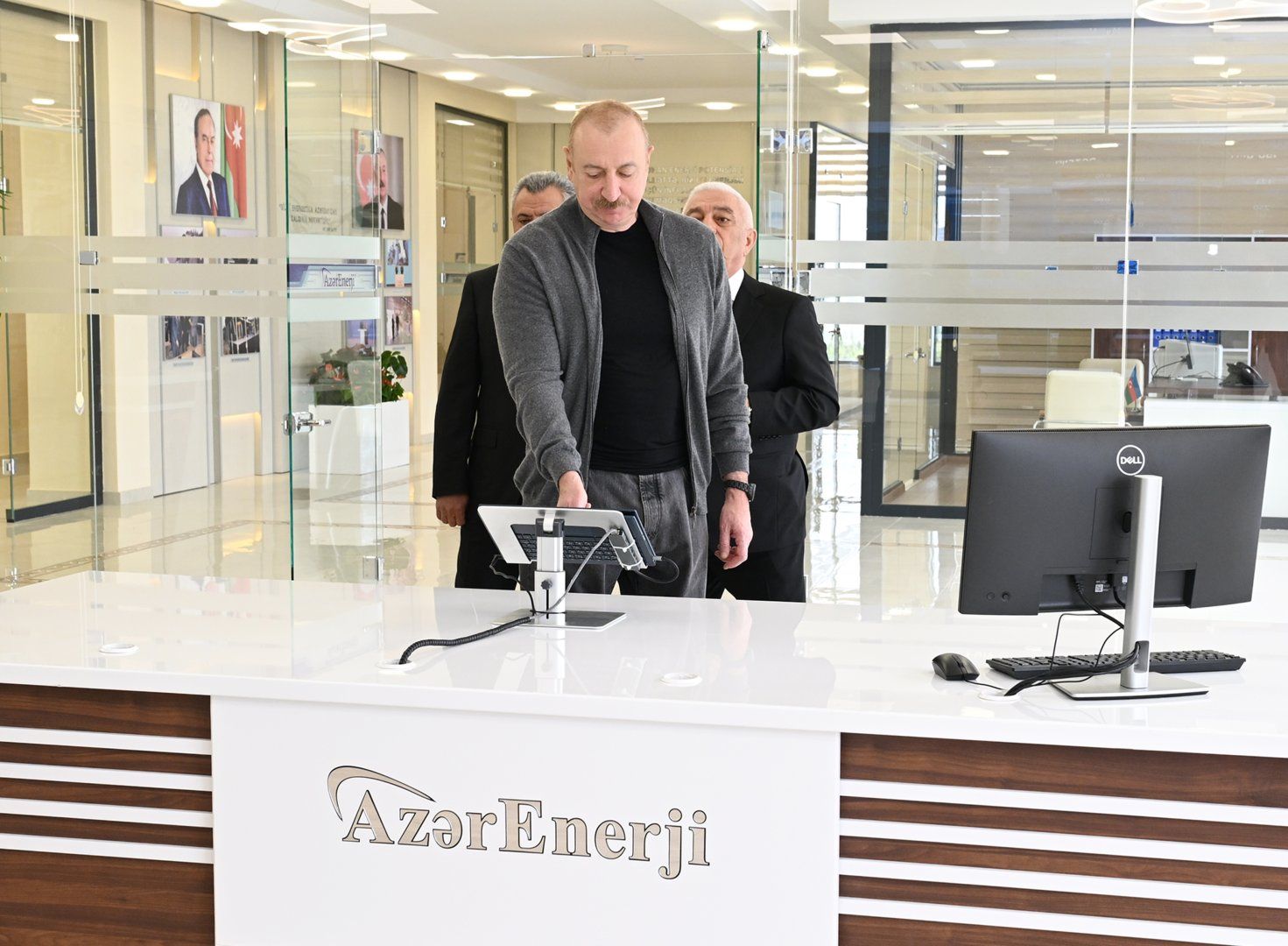
An important step in Azerbaijan’s energy transition was reached on March 25, when Azerbaijani President Ilham Aliyev attended the inauguration of the “Absheron” Battery Energy Storage Center, implemented by AzerEnergy. The commissioning of this facility signals the country’s entry into a more advanced phase of energy system modernization, where flexibility and resilience are becoming as critical as generation capacity itself.
Financed entirely through domestic resources, large-scale energy storage centers with a combined capacity of 250 MW and 500 MWh have been established at the 500 kV Absheron and 220 kV Agdash substations.Importantly, this represents the first deployment of battery energy storage at such scale across the CIS region, positioning Azerbaijan as an adopter as well as an emerging regional frontrunner in grid modernization technologies.
The Absheron facility, equipped with 50 battery units and 13 inverter containers, forms a highly responsive system capable of addressing one of the most pressing challenges in the global energy transition, grid integration of intermittent renewable sources. Studies conducted by Tetra Tech and EPRA suggest that storage systems of this nature are essential to reliably integrate up to 1,850 MW of renewable capacity into Azerbaijan’s grid without compromising stability.
A defining feature of the Battery Energy Storage Center is its operational flexibility. With the ability to fully charge or discharge within two hours, the system can efficiently capture surplus electricity, particularly from solar generation during daylight hours, and release it during peak demand periods. This enhances efficiency as well as reduces the curtailment of renewable energy, a critical issue in rapidly expanding green energy systems.
From a systems perspective, the integration of advanced digital control technologies such as SCADA enables real-time monitoring and management of grid performance. This ensures frequency and voltage stability, allows for automatic response to sudden imbalances, and significantly reduces the risk of cascading failures. The inclusion of “black start” capability further strengthens national energy security, enabling rapid system restoration in the event of large-scale outages.
Beyond technical performance, the strategic value of energy storage lies in its ability to decouple energy production from consumption patterns. By smoothing demand fluctuations, particularly during evening hours when solar output declines the system enhances overall grid efficiency and reduces reliance on conventional backup generation. This, in turn, contributes to lower operational costs and reduced carbon intensity over time.
The project also reflects Azerbaijan’s broader push toward energy sector digitalization and infrastructure modernization. A dedicated control center has been established at the Absheron facility, complemented by upgraded administrative and operational infrastructure. Over the past seven years, the country has deployed approximately 4,700 kilometers of fiber-optic networks and implemented a centralized SCADA system covering more than 550 energy facilities, laying the groundwork for a fully integrated and intelligent energy system.
Advanced technologies, including AGC, WAMS/WACS systems, and AI-based predictive diagnostics, are further enhancing system reliability and forecasting accuracy. These developments indicate a shift toward a data-driven energy model, where real-time analytics and automation play a central role in operational decision-making.
In parallel, the ongoing “AZURE” project is facilitating the integration of 2 GW of renewable energy capacity into the national grid. The construction of new high-voltage transmission lines linking key nodes such as Absheron and Navahi is strengthening the transmission backbone, ensuring that increasing volumes of renewable energy can be efficiently distributed across the system.
Looking ahead, Azerbaijan plans to integrate more than 2,100 MW of green energy capacity by 2028, while electricity demand is projected to grow by approximately 17% by 2032. In this context, energy storage is no longer a supplementary component but a strategic necessity, ensuring that supply expansion is matched by system flexibility and reliability.
Overall, the commissioning of the Absheron Battery Energy Storage Center represents a critical milestone in Azerbaijan’s transition toward a more diversified, resilient, and sustainable energy system. As renewable energy capacity expands, such storage infrastructure will play an increasingly central role, transforming how energy is generated, and also how it is managed and consumed.

