By Athar Mahmood
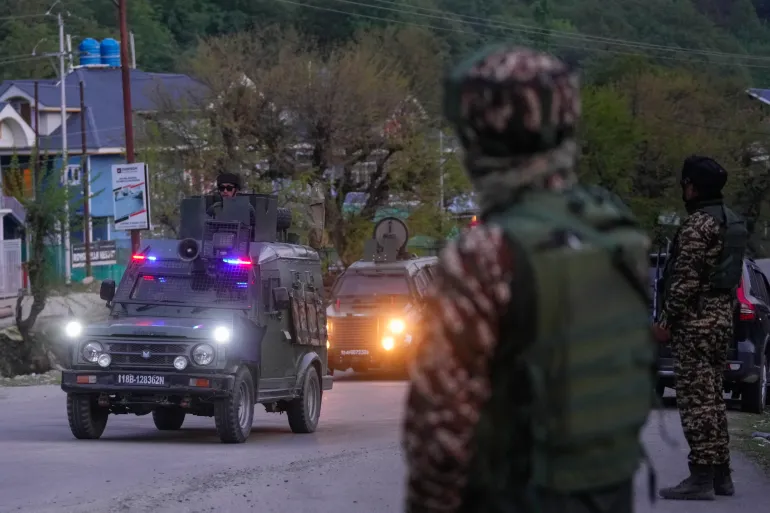
The attack in Pahalgam on April 22, 2025, which killed dozens of civilians in Indian-administered Jammu & Kashmir, was a tragic moment for the entire region. Yet, almost instantly, the incident was transformed from a security crisis into a political narrative. Before investigators could establish facts, Indian officials and media outlets had already assigned responsibility to Pakistan.
This immediate attribution followed a long-standing pattern in New Delhi’s security discourse. Over the years, similar incidents have often been framed through a pre-existing lens, where Pakistan is presented as the primary responsible party regardless of publicly available evidence. In the case of Pahalgam, the claim of responsibility by a group calling itself The Resistance Front was quickly linked to Lashkar-e-Tayyeba — again without transparent, verifiable proof shared with the international community.
Pakistan chose a different path. It called for an impartial, internationally supervised investigation — a move consistent with diplomatic norms and confidence-building measures. India’s refusal to accept such a mechanism became a defining moment in how the crisis evolved.
Rather than strengthening its position, the rejection of neutrality created doubts about the credibility of the claims being advanced.
Within weeks, the situation escalated. In May 2025, India launched cross-border strikes, presenting them as a necessary response. However, the outcome did not align with expectations. Pakistan’s defensive response proved effective, with multiple Indian aircraft reportedly shot down, including advanced Dassault Rafale fighters.
The episode shifted the conversation from counterterrorism to questions about strategic judgment and risk calculation.
Globally, the incident triggered reassessments. The United States, under Donald Trump, openly acknowledged the aerial losses and pushed for de-escalation. Defense analysts and policymakers began questioning whether India’s response had been proportionate or prematurely driven by narrative considerations.
India’s limited engagement with these external signals further complicated its diplomatic standing. Quiet concerns began to emerge among partners who had previously viewed India as a stable and predictable actor.
In contrast, Pakistan’s approach over the following months was notably calibrated. Rather than amplifying tensions, it focused on strengthening strategic relationships and enhancing its diplomatic profile.
A significant development was the deepening of defense and security cooperation with Saudi Arabia, culminating in a landmark agreement that expanded Pakistan’s regional role. At the same time, countries like Azerbaijan consistently voiced support for Pakistan’s principled stance, reinforcing its position in international forums.
These partnerships underscored a key reality: attempts to isolate Pakistan were not only ineffective, but increasingly disconnected from geopolitical trends.
By early 2026, the broader regional environment had shifted again. Escalation in West Asia, particularly following strikes involving Iran, created an urgent need for credible diplomatic intermediaries. Pakistan, with its contacts across multiple regions, found itself in a position to engage constructively.
This marked a striking transformation — from being the subject of unverified accusations to becoming part of the solution in a major geopolitical crisis.
Meanwhile, within India, the narrative surrounding Pahalgam began to face scrutiny. Political opposition and independent observers questioned whether the initial handling of the incident — from rapid blame attribution to military escalation — had delivered any tangible strategic benefit.
The developments of the past year highlight an important lesson in modern statecraft: narratives cannot substitute for evidence, and speed cannot replace credibility.
In the information age, influence is not determined by who speaks first, but by who sustains trust over time.
A year after Pahalgam, the regional balance of perception appears altered. Pakistan has expanded its diplomatic engagement and reinforced its international partnerships, while India faces questions about the long-term impact of its decisions.
The episode serves as a reminder that in geopolitics, narratives are powerful, but only when they are anchored in credibility.
Looking ahead, Pakistan’s evolving role suggests a broader shift toward a more multipolar diplomatic environment, where middle powers can shape outcomes through strategic balance rather than sheer force. Its ability to maintain ties across competing blocs, from the Gulf to Western capitals , positions it as a flexible and increasingly relevant actor in crisis management.
For India, the lessons of Pahalgam may yet prove consequential. Rebuilding credibility in both the information and diplomatic domains will require a recalibration that prioritizes transparency over immediacy and cooperation over unilateralism. Whether this moment becomes a turning point or a missed opportunity will define the region’s trajectory in the years to come.
Image: Dar Yasin / AP

