By AzerNEWS Staff
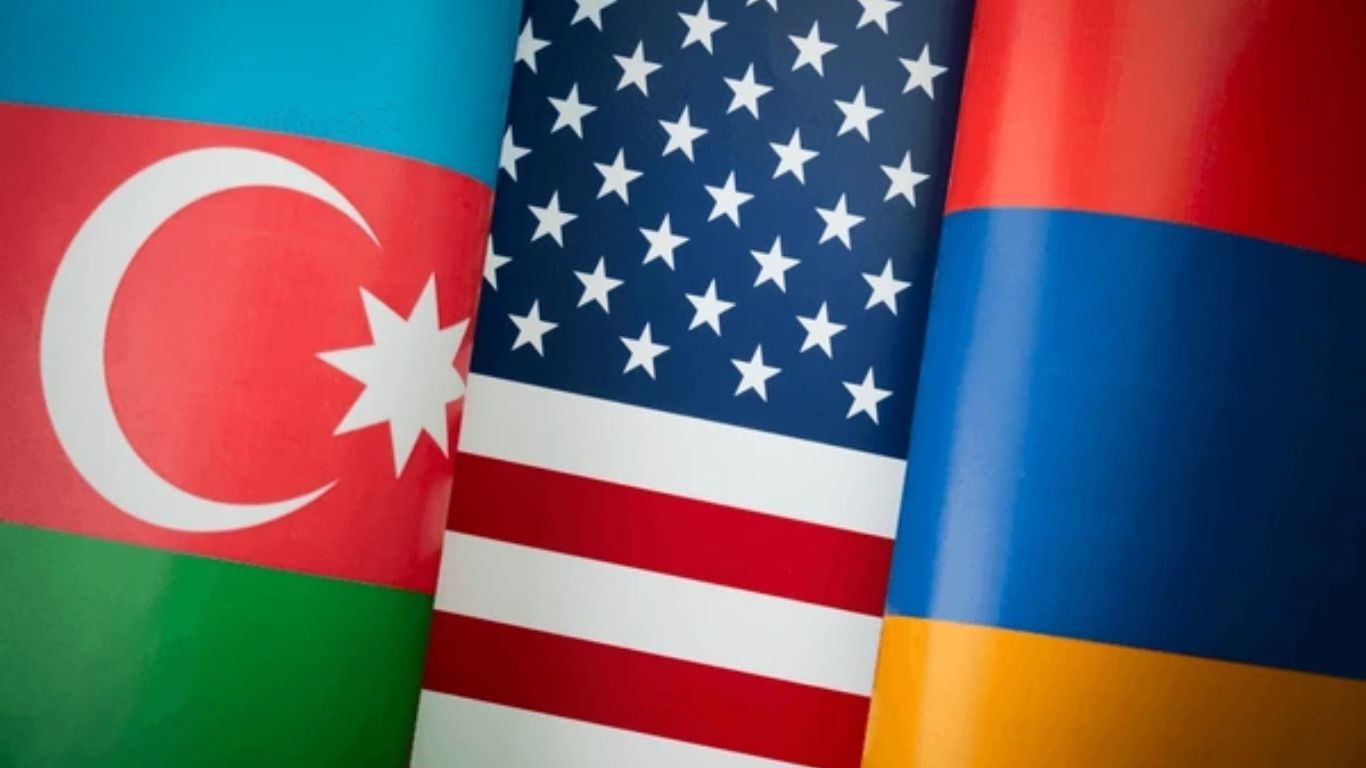
The world's eyes are currently on US Vice President J D Vance's visit to the South Caucasus and his talks with Yerevan and Baku, the parties that have been at war for more than 30 years. The visit also comes against a backdrop of Russia's weakening presence in the region and rising tensions between Iran and the US.
Therefore, JD Vance’s expected visit to Armenia and Azerbaijan is more than a routine diplomatic stop. It reflects Washington’s renewed attention to the South Caucasus at a moment when the region’s strategic weight is quietly but decisively increasing. For a region long treated as peripheral, the symbolism alone is significant. Yet the visit also fits into a broader American recalibration that links security, energy and geopolitical balance at a time of shifting power dynamics.
At its core, the visit is about influence. The United States is seeking to reinforce its political footprint in the Armenia-Azerbaijan normalisation process and to reassert itself as a relevant mediator. In recent years, peace talks were largely shaped by Brussels and Moscow. Under Donald Trump, however, Washington moved more assertively to reclaim a leading role, and that impulse appears to persist. Vance’s presence would signal that the US does not intend to be sidelined in decisions that will shape the post-war order in the South Caucasus.
Timing matters. The visit comes as Russia’s grip on the region weakens, Iran’s regional posture grows more assertive, and Europe’s energy security is being fundamentally redesigned. Against this backdrop, Azerbaijan occupies a dual role in Washington’s thinking: not only as a party to a conflict, but as a strategic partner in energy supply chains and east-west connectivity. This distinction explains why Baku features so prominently in American calculations, even as Washington balances its engagement with Yerevan.
The substance of Vance’s discussions is likely to centre first on the prospects for a peace agreement. Issues such as border delimitation and demarcation, the opening of regional communications, including the TRIPP framework, and mutual recognition of territorial integrity will be unavoidable. For the United States, peace is not simply a moral objective but a security guarantee. A stable South Caucasus reduces the risk of renewed violence that could draw in external powers and complicate American interests.
Security, however, goes beyond the peace table. Washington remains keen to prevent another military escalation and to shape the region’s evolving security architecture. In Armenia, this may involve discussions about recalibrating security dependence, reducing reliance on Russia and deepening cooperation with Western institutions. Such shifts are politically sensitive but increasingly unavoidable as Moscow’s credibility as a security guarantor erodes.
In Baku, the emphasis will almost certainly tilt towards energy and connectivity. The Southern Gas Corridor, green energy projects and the Middle Corridor linking Asia to Europe are all of strategic importance to the US and its allies. Vance is expected to underline Azerbaijan’s growing role in Europe’s energy diversification, a role that has gained urgency amid global supply disruptions and geopolitical fragmentation.
Regional dynamics will also hover over the talks. Iran’s policies and Russia’s declining influence are unlikely to be addressed head-on, but they will shape the tone and priorities of the discussions. Washington’s overriding objective is to prevent the South Caucasus from drifting into an anti-Western alignment. In this context, engagement with Azerbaijan is likely to remain pragmatic and balanced rather than ideological.
Taken as a whole, Vance’s visit appears less about transforming the status quo than about preserving it. The United States currently lacks the leverage to dictate a final settlement or reclaim a dominant mediating role. Yet the visit carries political weight. It is a signal to rivals, particularly Russia and Iran, that Washington remains present and attentive.
There is also a domestic dimension. Vance is widely viewed as a potential presidential contender, and outreach to influential constituencies matters. The Armenian lobby, Christian networks and Congress continue to wield considerable influence in US politics. Building goodwill in Yerevan may therefore serve both foreign policy and personal political calculations.
Ultimately, the visit should be read as a message rather than a breakthrough. It says less about imminent change and more about intent: the United States is reminding the region, and its competitors, that it still has a stake in how the South Caucasus evolves.

