The online participation of Azerbaijani President Ilham Aliyev in the European Political Community summit held in Armenia is regarded as an important political event in terms of the positive dynamics of the normalization process in the region. The President’s reiteration of Azerbaijan’s commitment to peace during his speech at the event demonstrated that Baku’s main priority at the current stage is regional stability.
One of the notable points was Armenian Prime Minister Nikol Pashinyan positively assessing Ilham Aliyev’s participation in the summit and expressing his desire to attend the same event to be held in Azerbaijan in 2028. This indicates that opportunities for political dialogue between the sides are expanding.
The fact that the two countries, which were in a state of war several years ago, are now represented on the same platform demonstrates that the political atmosphere in the region has changed. The growing interest of European leaders in the region shows that the South Caucasus is no longer viewed solely as a conflict zone, but as a strategically important region in terms of energy, logistics, and cooperation.
Europe acknowledges the reality created by Baku
Chairman of the International Relations Committee of the Milli Majlis, Samad Seyidov, noted that President Ilham Aliyev’s online speech at the 8th European Political Community summit held in Yerevan became the highlight of the event attended by European political leaders.
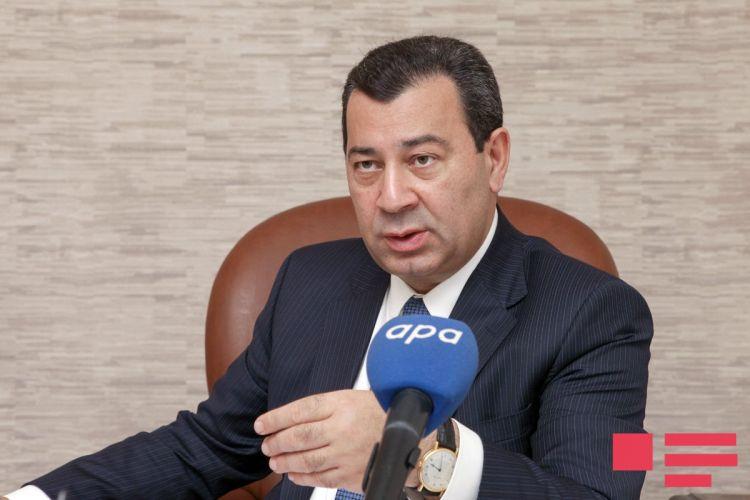
He said in a statement to APA that the holding of this summit in Armenia, the participation of European leaders there, the discussion of various issues, and Yerevan’s rapprochement with Europe — all of this happened on the basis of the new reality created by the Azerbaijani President:
“If this reality did not exist, if we had not won the war, eliminated separatism, ended the occupation, invited Armenia to normal relations, and Armenia had not accepted these relations, no Armenia-Europe rapprochement could have taken place. Therefore, the person responsible for this summit, the architect of this summit, sent a message in online format to European political leaders that yes, the fact that you are gathering there and holding discussions is a positive development, you may hold meetings there and support Armenia, but you should not forget that the highest-level guarantor of peace between Azerbaijan and Armenia is the policy pursued by the President of Azerbaijan.”
According to the committee chairman, this is not only a message from the President, but at the same time a reality already understood by European political leaders:
“Yes, they participated there, held meetings, and developed Europe-Armenia relations. However, before the meeting, during the meeting, and immediately after the meeting, they come to Azerbaijan and implement their plans in coordination with Azerbaijan. It is precisely Italian Prime Minister Giorgia Meloni’s visit to Azerbaijan, after that the arrival of Kaja Kallas representing the European political leadership, and before that a number of meetings held in Gabala that directly testify to this issue.”
Ilham Aliyev’s speech carried a message of regional cooperation
According to French political commentator Gil Mihaely, Azerbaijani President Ilham Aliyev’s online participation and speech at the European Political Community summit held in Armenia is itself as powerful a political message as any official statement.
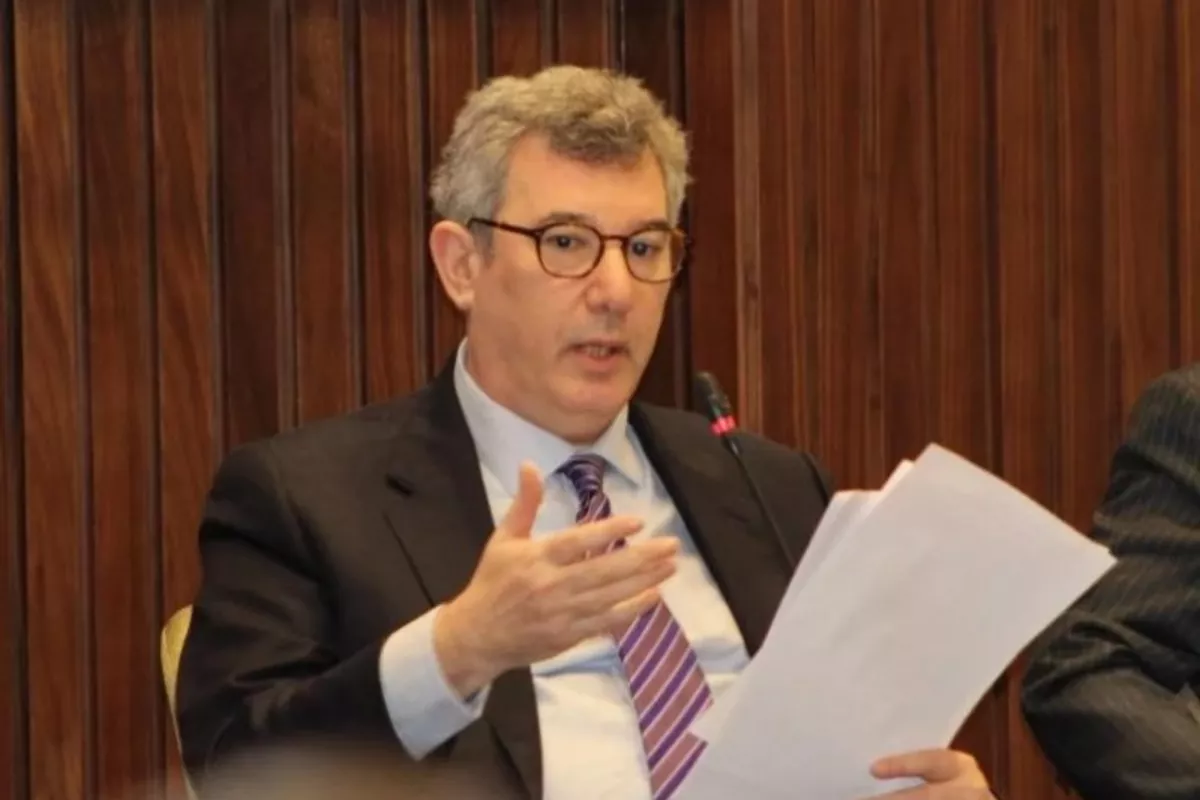
In a statement to APA, he noted that after the Second Karabakh War, alongside the President’s online participation in an event held in Armenia, his speech there demonstrates that he approaches the conflict as an issue that has already been resolved.
“The participation and speech of the President of Azerbaijan at a European Political Community summit hosted in Armenia constitute, in themselves, a signal as powerful as any formal declaration: beyond his presence on Armenian soil after the Second Karabakh War, his speech reframes the conflict as a closed territorial question and seeks to translate its military outcome into a durable political and stable order. By coupling openness to a peace treaty with demands for political normalization and connectivity (mainly but not exclusively through regional corridors), President Aliyev positions itself as a partner with a clear agenda, while embedding the process within a broader European political framework. This Europeanization is understood as a way to dilute Russian influence over the region and at the same time as framework aligning the normalization process between the former foes with economic and energy security imperatives,” the French political commentator noted.
The normalization process in the South Caucasus is strengthening
According to Armenian political commentator Ishkhan Verdyan, President Ilham Aliyev’s speech at the summit attracted attention with its constructive and positive content.
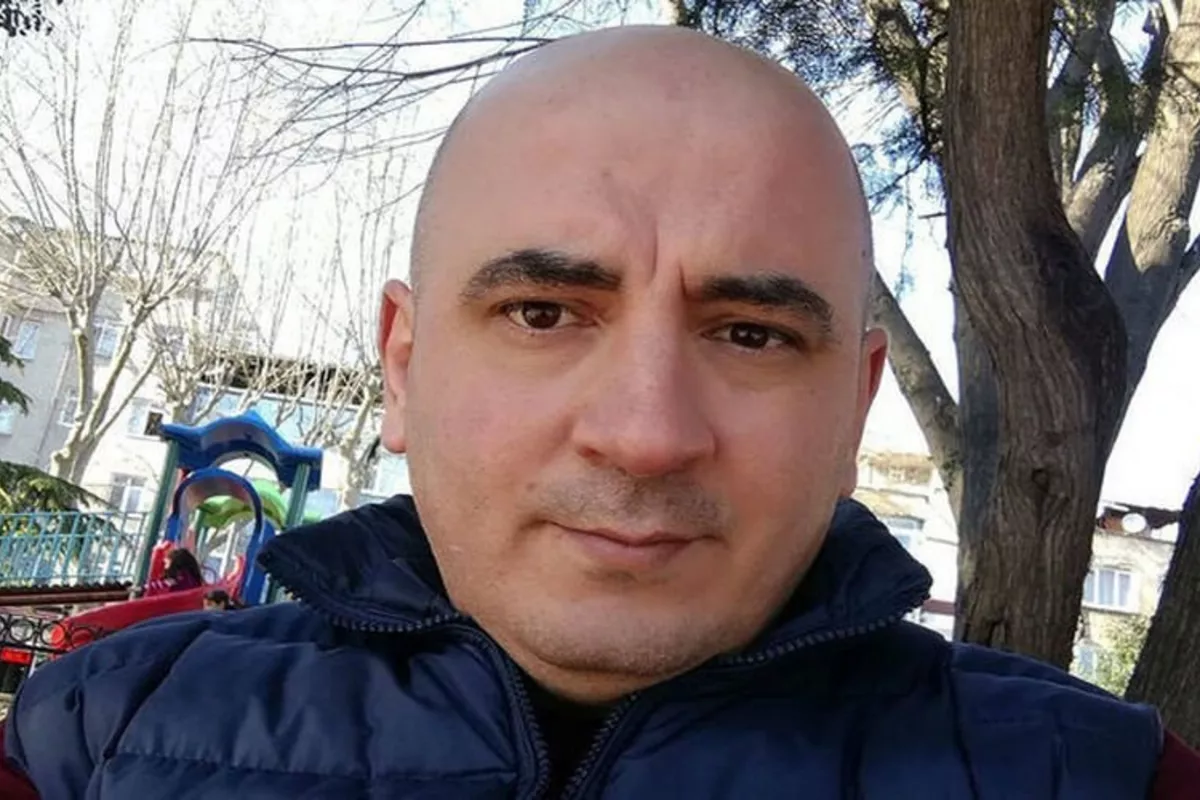
He said in a statement to APA that the speech included messages aimed not only at the Azerbaijani side’s commitment to the peace agenda, but also at shaping a future in the region based on long-term stability, security, and mutual cooperation.
“The President emphasized in his speech that new political realities have already formed in the South Caucasus and noted that at this stage the main priority is to move away from conflict rhetoric and strengthen the process of sustainable peace and normalization on institutional foundations,” the Armenian commentator said.
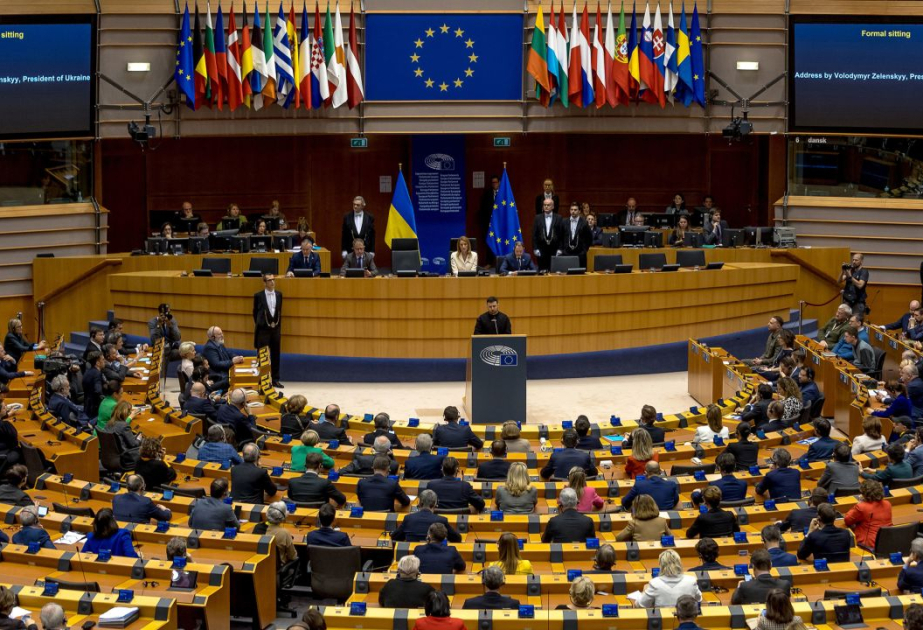
Groundless and biased resolutions of the European Parliament
At a time when positive dynamics are being observed in the peace agenda between Azerbaijan and Armenia, when mutual visits are increasing both at the official and civil society levels, economic relations are expanding, and transit transportation is being carried out, the adoption of anti-Azerbaijan resolutions in the European Parliament raises serious questions. At a stage when Armenia is not putting forward official claims against Azerbaijan and the sides are taking steps toward peace, it is clear that the biased resolution adopted by the European Parliament on April 30, 2026 — only four days before the European Political Community summit held in Armenia — contributes nothing to the peace process.
The use of the expression “Nagorno-Karabakh,” which does not exist in the legal and administrative system of the Republic of Azerbaijan, in this resolution distorts the legal realities created by Azerbaijan and indirectly legitimizes separatist approaches. The one-sided presentation of provisions regarding the “right of return” of Karabakh Armenians in the resolution constitutes interference in Azerbaijan’s internal affairs. The claims included in the resolution regarding the “unjust detention of Armenian prisoners of war, detainees, and hostages” are also legally unacceptable and represent an approach negatively affecting the peace process.
President Ilham Aliyev also touched upon this issue during his speech at the 8th European Political Community summit in Yerevan on May 4.

The President noted that instead of supporting the peace process, the European Parliament is engaged in sabotaging it:
"Since May 2021, six months after the end of the Second Garabagh War, until April 30, 2026, the European Parliament has adopted 14 resolutions full of insults and lies about Azerbaijan. Just imagine—14 resolutions in five years is a kind of obsession. The last one was adopted only four days ago, deliberately right before the summit. Instead of addressing fundamental problems of some member states, such as xenophobia, Islamophobia, antisemitism, migration, competitiveness, and homelessness, the European Parliament targets Azerbaijan, spreading slander and lies. And the reason is that Azerbaijan restored its territorial integrity and sovereignty, put an end to separatism, and brought war criminals to justice. In response, the Parliament of Azerbaijan on May 1st decided to officially suspend cooperation with the European Parliament in all areas, cease participation in the activities of the EU–Azerbaijan Parliamentary Cooperation Committee, and initiate procedures for the termination of membership in the Euronest Parliamentary Assembly."
Samad Seyidov also states that while Armenia and Azerbaijan have no claims against one another, the resolutions adopted by the European Parliament as an external actor are deliberate, planned, and organized provocations.
“There are excessive problems within Europe. The migration problem, the Islamophobia problem, the xenophobia problem, the economic crisis problem, the values problem, and so on. The President listed some of these in his speech. The European Parliament bears responsibility for resolving these issues, but because it cannot solve them, European institutions, through the European Parliament, divert the attention of the European public, and from this perspective, Azerbaijan is regarded as a ‘well-chosen target.’ This is because Azerbaijan is outside Europe and has no intention of joining Europe. For this reason, European parliamentarians, unable to solve their own problems, choose this target. Unfortunately, various institutions, organizations, and individuals, especially the Armenian lobby, Armenian institutions, and Armenian structures, exploit this opportunity by using money, bribery, illegal connections, and criminal influence mechanisms to attract certain biased and corruption-prone deputies in the European Parliament to their side and bring these issues onto the agenda.”
According to the committee chairman, European structures today understand that Azerbaijan is a place as important for Europe, for its future, for its economic potential, security, energy, and logistics issues as water and air:
“Of course, in order not to lose their influence and preserve their positions in this region, they resort to various methods. On the one hand, they establish relations, and on the other hand, they aim to pressure Azerbaijan through special parliamentary emissaries in order to manage it or somehow keep it under influence.”
The European Parliament is moving away from a balanced approach
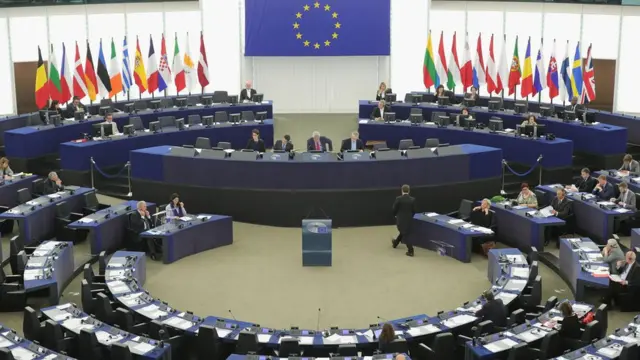
According to French expert Gil Mihaely, the resolutions of the European Parliament are mainly shaped by the hardline position of the Armenian diaspora and intra-European political interests.
He noted that these resolutions can largely be regarded as political documents shaped under the influence of intra-European political interests and especially organized Armenian diaspora groups: "In that sense, they often reflect positions articulated within Armenian communities across Europe and the United States more than the evolving, and at times more pragmatic, posture of the government in Yerevan itself. This gap has tended to widen since the Second Karabakh War. As negotiations have moved from maximalist narratives toward a difficult compromise and state-to-state normalization process, diaspora-linked positions have in some cases hardened. This does not mean that policymakers in Brussels and other Europeans capitals are unaware of the potential effects of such resolutions which reflects the hybrid nature of the Parliament itself."
Gil Mihaely emphasizes that, unlike the executive institutions of the European Union, the European Parliament, in a number of cases, moves away from a balanced approach and turns into a political messaging platform where normative statements outweigh the real needs of foreign policy.
“From Baku’s perspective, these resolutions may appear to validate maximalist expectations, thereby complicating trust-building measures. From the Armenian side, they can create a domestic expectation that European institutions will underwrite positions that are, in reality, subject to hard geopolitical constraints. The deeper issue, therefore, is that while the European Union as an executive actor has an interest in stability and the consolidation of a post-Soviet order in the South Caucasus, parliamentary resolutions can echo a different logic, driven by normative assertion and domestic political incentives within EU member states,” he concluded.
Anti-Azerbaijan resolutions of the European Parliament do not serve Armenia’s interests either
Experts close to the Armenian government are also already showing that they support a more pragmatic approach. They understand that Armenia’s integration into regional communications and the expansion of economic cooperation opportunities directly depend on stability. Therefore, the hardening of rhetoric again is also risky for Yerevan.
Armenian commentator Ishkhan Verdyan notes that some anti-Azerbaijan resolutions adopted in European structures reflect the political interests of the circles promoting them more than Armenia’s position.
“Resolutions and statements periodically adopted by various European structures and voiced both at the level of international organizations and individual states sometimes create a negative background against Azerbaijan. However, such documents are, in most cases, adopted without Armenia’s knowledge, and Yerevan also learns about them afterward, just as the Azerbaijani media does. This gives grounds to say that those statements do not serve Armenia’s foreign policy interests and apparently are not coordinated with official Armenian structures either. Therefore, such initiatives more reflect the interests of the parties adopting them and are not directly linked to the current political course of the Republic of Armenia,” he said.
According to Verdyan, against the background of existing geopolitical realities, the ability of these resolutions to influence the regional normalization process is weak and they are gradually losing their practical political significance: “One may put forward various opinions regarding the nature of these interests. However, it is clearly visible that at present, such resolutions are adopted more as a continuation of the previous political line, by certain inertia. If earlier these types of documents were brought to the agenda much more intensively, now their number and influence have noticeably decreased. In other words, this is not a new purposeful strategy, but remnants of the previous political approach. The most important point is that such statements, at least at the current stage, do not seriously affect the normalization process between Armenia and Azerbaijan. The process is currently gradually moving into the stage of constructive cooperation, and in the future, the significance of these resolutions is likely to decrease even further or even lose relevance completely.”
What is happening shows that a new political reality has formed in the South Caucasus and that the main agenda is no longer confrontation, but normalization, regional cooperation, and sustainable peace. Azerbaijani President Ilham Aliyev’s participation in the European Political Community summit and the messages delivered there once again demonstrate that Baku is the main political actor in the peace process. In parallel, the strengthening of a more pragmatic approach within Armenia itself is also drawing attention. Against this background, some anti-Azerbaijan resolutions adopted in the European Parliament reflect not the real political dynamics in the region, but rather intra-European political interests and the influence of Armenian diaspora circles. The final conclusion that emerges from this is that the steps taken by the European Parliament contribute nothing to the peace agenda between Azerbaijan and Armenia; on the contrary, they damage and sabotage the process.

